Why TFT LCD Module Quality Matters in Commercial Vehicle Display Systems
Commercial vehicle display systems are becoming increasingly important in buses, coaches, trucks, shuttle vehicles and construction machinery. These systems can support passenger information, multimedia entertainment, onboard advertising, camera monitoring, route guidance and driver assistance.
Although buyers often focus on screen size, enclosure design and multimedia functions, the TFT LCD module inside the finished monitor has a direct influence on image quality, visibility and long-term operating stability.
For vehicle manufacturers, fleet operators and system integrators, understanding the role of the LCD module can make it easier to select a reliable commercial vehicle display solution.
A Vehicle Monitor Is More Than an Ordinary Screen
A commercial vehicle monitor normally consists of several important components, including the TFT LCD module, backlight system, controller board, power supply, signal interface, enclosure and mounting structure.
These parts must work together under demanding vehicle conditions. Unlike an ordinary indoor display, a bus or coach monitor may be exposed to continuous vibration, changing temperatures, electrical interference and long operating hours.
The finished monitor therefore needs both a reliable vehicle-level design and a suitable LCD panel.
Even when two monitors have the same screen size and resolution, their actual performance may be different because of variations in brightness, viewing angle, contrast, backlight quality and panel stability.
Brightness Affects Daytime Visibility
Brightness is one of the most important specifications for a vehicle LCD display.
Screens installed near windows may be exposed to strong daylight. If the brightness is too low, passengers or drivers may find it difficult to read route information, safety messages or camera images.
The appropriate brightness level depends on the installation location. A monitor installed inside a shaded passenger cabin may not require the same brightness as a display positioned near the windshield or vehicle window.
However, higher brightness alone does not always guarantee better performance. The backlight design, surface treatment, contrast and power consumption must also be considered.
For projects that require customized panel specifications, buyers can review professional TFT LCD modules and display components according to the required size, resolution, brightness and interface.
Viewing Angle Is Important for Passenger Displays
Passengers inside a bus or coach do not all view the monitor from the same position. Some may sit directly in front of the display, while others see it from the side or from below.
A limited viewing angle can cause color changes, reduced contrast or darker images when the screen is viewed off-center.
IPS TFT LCD technology is commonly considered for applications requiring wider viewing angles and more consistent image presentation. This can be especially useful for passenger information screens, ceiling-mounted monitors and advertising displays.
However, the final choice should still depend on the project budget, screen size, installation angle and required display performance.
Resolution Should Match the Application
Higher resolution can provide clearer text, sharper graphics and more detailed video content, but buyers should select the resolution according to the actual application.
A passenger information display that mainly shows route numbers and station names may have different requirements from a large entertainment monitor used to play Full HD video.
The controller board and media system must also support the selected resolution. Using an LCD panel with a higher resolution does not automatically improve the final image if the input signal, media source or controller cannot provide matching content.
For this reason, the LCD module, controller board and signal source should be evaluated as one complete system.
Interface Compatibility Influences System Development
TFT LCD modules may use interfaces such as LVDS, eDP, RGB or MIPI. The appropriate interface depends on the panel size, resolution, controller platform and overall system design.
For finished vehicle monitors, the internal LCD interface is normally connected to a controller board. The controller then receives external signals through interfaces such as HDMI, VGA, AV, USB or customized vehicle communication ports.
Selecting an incompatible LCD module can increase development time and require additional controller modifications.
Before confirming a panel, system developers should verify the interface type, connector position, pin definition, operating voltage and signal compatibility.
Operating Temperature Cannot Be Ignored
Vehicle interiors can become extremely hot after prolonged exposure to sunlight. In colder regions, commercial vehicles may also operate in low-temperature environments.
An LCD module designed only for ordinary indoor use may experience slow response, reduced brightness, color changes or unstable operation under extreme temperatures.
For vehicle projects, buyers should confirm both the operating temperature and storage temperature of the panel.
The finished monitor must also provide suitable heat dissipation. Even when the LCD module supports a wide temperature range, internal heat from the backlight, controller board and power system must be properly managed.
Vibration Requires a Complete Structural Design
The LCD panel itself is only one part of vehicle-level reliability.
A bus or truck monitor may experience continuous vibration caused by road conditions, vehicle movement and engine operation. The enclosure, mounting brackets, internal connectors and circuit boards must therefore be designed to remain stable during long-term use.
Internal cables should be secured properly, and the LCD module should be mounted without creating excessive pressure on the glass.
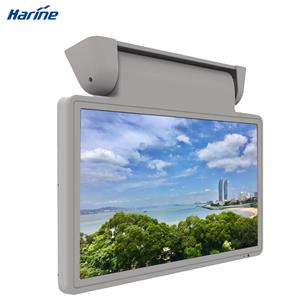
For flip-down or motorized monitors, the rotating mechanism must also protect the panel and signal connections during repeated opening and closing.
This is why a commercial vehicle display should not simply be treated as an ordinary monitor installed inside a vehicle.
Backlight Lifetime Influences Maintenance Costs
Commercial vehicle monitors may operate for many hours every day. Passenger information screens and advertising displays may remain active throughout an entire route or working shift.
The lifetime and stability of the LED backlight therefore affect the long-term maintenance cost of the display system.
An unreliable backlight may gradually lose brightness, develop uneven illumination or fail earlier than expected. Replacing monitors across an entire fleet can be expensive and disruptive.
Buyers should evaluate backlight lifetime, brightness uniformity, heat dissipation and power management rather than considering only the initial purchase price.
Touch Integration Requires Additional Evaluation
Some commercial vehicle displays require touch operation, especially center control monitors, driver interfaces and intelligent multimedia systems.
Touch integration introduces additional factors such as cover-glass thickness, touch sensitivity, optical bonding, glove operation, electromagnetic interference and environmental durability.
The touch panel must be matched with the TFT LCD module and controller system. Poor integration can cause reduced display clarity, touch inaccuracy or visible air gaps between the touch panel and LCD.
For customized projects, the supplier should confirm whether the application requires resistive touch, projected capacitive touch or a non-touch display.
How LCD Modules Become Finished Vehicle Displays
A TFT LCD module cannot normally be installed directly into a bus or coach without additional development.
The complete production process may include:
Selecting the appropriate LCD panel;
Developing or matching the controller board;
Designing the vehicle power system;
Creating the enclosure and mounting structure;
Integrating multimedia and communication functions;
Performing vibration and temperature testing;
Confirming compatibility with the vehicle environment.
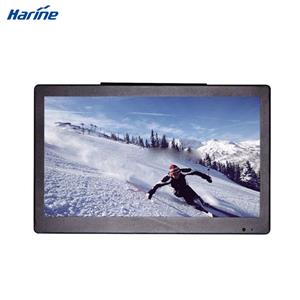
HLMonitor focuses on finished vehicle display systems, including fixed bus monitors, manual flip-down monitors, motorized monitors, stretched bar displays and Android multimedia screens. Its bus and coach category includes products designed for passenger information, entertainment and commercial vehicle installations.
The cooperation between LCD component suppliers and vehicle display manufacturers helps connect panel-level specifications with real application requirements.
What Buyers Should Confirm Before Starting a Project
Before selecting a commercial vehicle display, buyers should provide clear project information.
This normally includes the required screen size, resolution, brightness, installation location, viewing distance, signal input, power supply, operating temperature and mounting method.
Buyers should also explain whether the screen will be used for passenger information, advertising, entertainment, camera monitoring or driver control.
A clear application description allows the supplier to recommend a more appropriate LCD module, controller platform and finished monitor structure.
Component Quality and System Design Are Equally Important
A high-quality LCD panel does not automatically guarantee a reliable finished monitor. Similarly, a well-designed enclosure cannot compensate for an unsuitable panel.
The LCD module and the vehicle display system must be evaluated together.
The LCD component determines important visual characteristics such as brightness, resolution, viewing angle and color performance. The finished monitor design determines power stability, signal processing, heat dissipation, vibration resistance and installation reliability.
When both parts are correctly matched, the result is a display solution that can provide stable performance throughout the vehicle’s service life.
Conclusion
TFT LCD module quality plays an important role in commercial vehicle display systems. Brightness, viewing angle, resolution, interface, temperature range and backlight stability can all affect the performance of the finished monitor.
However, a reliable bus, coach or truck display also requires professional controller design, power management, enclosure development and vehicle-level integration.
By combining suitable TFT LCD components with a complete commercial vehicle display solution, manufacturers and system integrators can reduce development risks, improve visual performance and create more reliable products for passenger information, multimedia, advertising and safety applications.