Why Motorized Flip Down Monitors Are Ideal for Modern Coaches
Passenger transportation vehicles must provide useful display functions without occupying too much cabin space. This is one reason the motorized flip down monitor has become a practical display option for coaches, tour buses and premium shuttle vehicles.
When the monitor is needed, the screen opens automatically for passenger viewing. When playback is finished, it folds back into the ceiling area, helping the vehicle maintain a clean and organized interior.
Compared with a permanently exposed monitor, a motorized design offers a balance between large-screen visibility, space efficiency and convenient operation.
What Is a Motorized Flip Down Monitor?
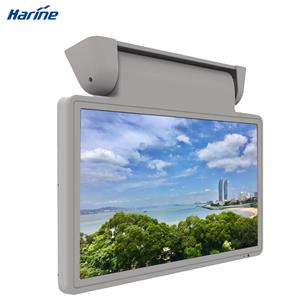
A motorized flip down monitor is a vehicle LCD display equipped with an electrically controlled opening and closing mechanism. It is usually installed on the ceiling or front bulkhead of a bus or coach.
The screen remains folded when it is not in use. After receiving a control signal, the motorized mechanism lowers the display into the viewing position. Depending on the system design, the monitor may be controlled through a dashboard switch, remote control, media signal or centralized vehicle control unit.
Motorized bus monitors are commercially available in different sizes and commonly use 12V or 24V vehicle power systems. Some models also provide adjustable viewing angles and position-memory functions.
Space-Saving Design for Passenger Cabins
Space inside a coach is limited. Ceiling lights, air-conditioning vents, luggage racks, speakers and emergency equipment must all fit into the same interior area.
A motorized flip down monitor uses space more efficiently because the display can be stored when it is not operating. This helps reduce visual clutter and lowers the risk of passengers accidentally touching or striking the screen while entering or leaving the vehicle.
The fold-away structure is especially useful for large monitors. A fixed display of the same size may remain prominent even when it is turned off, while a motorized model can integrate more naturally into the ceiling design.
Better Passenger Visibility
A motorized display can be positioned at a suitable downward angle after opening. This helps passengers view the screen from different seat rows without requiring the monitor to remain permanently tilted.
For long-distance coaches, the display may be used for entertainment, destination introductions, travel information or safety videos. A wide viewing angle and Full HD image can improve visibility across the cabin.
HLMonitor offers motorized vehicle displays specifically designed for buses and coaches, including models with LED backlighting, wide viewing angles, anti-vibration features and low-noise opening and closing mechanisms.
A Cleaner Interior Appearance
Interior design has become increasingly important in modern coaches. Operators want passenger cabins that appear spacious, comfortable and professionally finished.
A motorized flip down monitor supports this goal by hiding the display when it is not required. The monitor can remain closed during boarding, short transfers or periods when no content is being shown.
When opened, the screen becomes part of the passenger-information or entertainment system. When closed, it reduces visual obstruction and allows the ceiling to retain a cleaner appearance.
This makes the design suitable for executive coaches, tourism buses, airport transfer vehicles and other applications where presentation matters.
Designed for Vehicle Operating Conditions
A motorized monitor contains both electronic and mechanical components. Therefore, its reliability depends on more than the LCD panel.
The motor, gears, hinges, brackets and control circuit must continue operating under vibration and repeated opening cycles. A mechanism that works well in a stationary demonstration may perform differently after long-term use inside a moving vehicle.
The display should also tolerate electrical interference and voltage changes produced by the vehicle system. This is why buyers should select a monitor designed specifically for buses and coaches rather than adapting an ordinary indoor screen.
Important Features to Compare
When comparing motorized flip down monitor options, buyers should first evaluate the available installation space. The screen must open without interfering with seats, overhead racks or passenger movement.
The operating voltage should match the vehicle electrical system. For fleets containing both 12V and 24V vehicles, a wide-input model can simplify standardization.
The video input should be compatible with the onboard player. AV input may be suitable for an existing analog entertainment system, while HDMI is preferable for high-definition digital content.
Opening speed and operating noise should also be checked. A smooth, quiet mechanism creates a better passenger experience and reduces stress on the moving components.
Motorized Monitor Versus Manual Flip-Down Monitor
A manual flip-down monitor uses a simpler mechanism and may be suitable for projects with limited budgets or infrequent operation. However, a driver or staff member must open and close the screen manually.
A motorized flip down monitor provides more convenient centralized control. Several screens can potentially be operated as part of the vehicle’s entertainment system, reducing the need for staff to move through the cabin.
The motorized model is therefore well suited to premium buses, long-distance coaches and applications where the screen is used regularly.
The final decision should consider project budget, number of monitors, frequency of use, maintenance conditions and desired passenger experience.
Typical Applications
A motorized flip down monitor can be used in tourism coaches to display destination videos and tour information. In intercity buses, it can provide movies, announcements and safety guidance.
Airport shuttle buses can use the display for terminal information, hotel introductions or promotional content. Employee transportation vehicles may show company information and training videos. School or institutional buses can use the monitor for educational content and travel instructions when permitted by local operating requirements.
Because the screen is connected to an external signal source, the same display can support many types of content without changing the basic hardware.
Customization for Vehicle Projects
Bus and coach manufacturers often require customized mounting brackets, housings, interfaces, cable lengths or appearance details.
The position of the monitor, ceiling structure and available installation depth may vary between vehicle models. For this reason, technical drawings and installation dimensions should be reviewed before production begins.
OEM and ODM customization can also help the display match the interior color, vehicle brand and media-system specification.