What Should Buyers Look for in a Car LCD Screen Manufacturer?
Choosing the right Car LCD screen manufacturer is an important decision for bus operators, vehicle equipment distributors, system integrators, and commercial vehicle manufacturers. A car LCD screen is not simply a display installed inside a vehicle. It must operate reliably under vibration, voltage fluctuation, temperature changes, dust, and continuous daily use.
For buyers sourcing screens for buses, coaches, school buses, trucks, and other commercial vehicles, product appearance and price should not be the only considerations. Manufacturing experience, product stability, customization capability, quality control, and after-sales support can all influence the long-term performance of the final vehicle display system.
This article explains the key factors buyers should evaluate when selecting a professional Car LCD screen manufacturer.
Experience in Vehicle Display Manufacturing
The first factor to consider is whether the supplier has real experience in automotive and commercial vehicle display applications.
Vehicle displays have different technical requirements from ordinary home televisions or desktop monitors. They may need to support 12V or 24V vehicle power systems, withstand continuous vibration, operate in changing temperatures, and remain stable when the engine starts or the electrical system fluctuates.
An experienced vehicle LCD screen manufacturer understands how these conditions affect internal components, mounting structures, power boards, signal interfaces, and LCD panels. The manufacturer should be able to recommend suitable solutions based on the vehicle type, installation location, operating environment, and intended application.
For example, a display installed in a tour coach may be used for passenger entertainment, while a screen installed in a school bus may show safety videos and announcements. Different applications may require different sizes, mounting methods, brightness levels, interfaces, and control functions.
A Complete Range of Car LCD Screen Options
A reliable manufacturer should offer more than one standard screen model. Commercial vehicle projects often require different screen sizes and installation methods.
Common options include fixed car LCD monitors, manual flip-down monitors, motorized flip-down screens, roof-mounted displays, wall-mounted monitors, and customized vehicle display systems. Screen sizes may range from compact models to large-format displays suitable for buses and coaches.
A broad product range allows buyers to select the most appropriate solution without changing suppliers for every new project. It also demonstrates that the manufacturer has experience serving different vehicle platforms and installation requirements.
When comparing suppliers, buyers should confirm whether the manufacturer can provide models with different resolutions, brightness levels, aspect ratios, housing designs, video inputs, audio functions, and operating voltages.
Stable Performance in Vehicle Environments
Reliability is one of the most important requirements for any car LCD screen manufacturer.
Vehicle screens may be exposed to frequent vibration, sudden impact, high temperatures, low temperatures, electromagnetic interference, and long operating hours. A screen that performs well in an office environment may not remain stable inside a moving bus or commercial vehicle.
Buyers should ask how the manufacturer improves product reliability. Important considerations include anti-vibration structural design, durable metal or reinforced housings, stable power management, effective heat dissipation, reliable connectors, and protection against electrical interference.
The monitor should also remain stable during vehicle ignition and voltage changes. A professional manufacturer will normally design its products specifically for 12V or 24V vehicle electrical systems rather than simply adapting a consumer monitor.
Suitable Screen Brightness and Image Quality
Image quality is another important factor, but the highest specification is not always the best choice for every application.
Resolution, brightness, contrast ratio, viewing angle, and color performance should be selected according to the installation environment. A screen installed inside a passenger cabin may require moderate brightness and wide viewing angles, while a display placed near a window may need higher brightness to remain visible in daylight.
A professional automotive LCD screen manufacturer should help buyers balance visual performance, power consumption, heat generation, and cost.
Wide viewing angles are especially important for bus and coach applications because passengers view the screen from different seats and positions. The image should remain clear without excessive color shift when viewed from the side, above, or below.
Fixed, Manual, and Motorized Installation Options
The mounting structure directly affects usability, appearance, and long-term reliability.
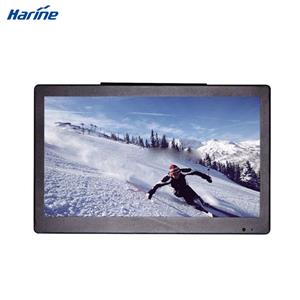
Fixed car LCD screens are suitable for vehicles where the monitor remains visible at all times. They offer a simple structure and are often selected for stable, long-term installations.
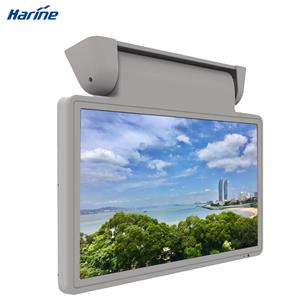
Manual flip-down monitors can be folded when they are not in use, helping save interior space. They are commonly installed on the ceiling of buses and coaches.
Motorized flip-down monitors provide automatic opening and closing through an electric mechanism. They create a cleaner and more modern passenger environment, but they also require reliable motors, control boards, limit switches, and mechanical structures.
When choosing a car LCD screen manufacturer, buyers should evaluate whether the supplier has experience producing all three types. Motorized models in particular require careful mechanical and electrical design to prevent excessive noise, shaking, jamming, or premature failure.
Compatibility With Vehicle Video Systems
A car LCD screen must connect correctly with the vehicle’s media player, control system, camera system, or other video source.
Buyers should confirm which input interfaces are supported. Depending on the application, these may include HDMI, VGA, AV, USB, CVBS, or other customized connections. Some projects may also require audio output, built-in speakers, remote control, signal switching, or integration with a central vehicle media system.
Compatibility should be confirmed before placing an order. A professional manufacturer should be able to review the buyer’s system requirements and recommend the correct interface configuration.
For customized projects, the supplier may also need to modify the input board, connector location, wiring harness, control protocol, or software functions.
Customization and OEM Capability
Standard products are suitable for many projects, but some buyers require customized solutions.
A capable car LCD screen manufacturer should offer OEM and ODM services for housing design, logo printing, screen size, mounting brackets, interfaces, cable length, voltage input, packaging, startup logo, menu language, and other functions.
Customization is especially important for vehicle manufacturers and system integrators that need the display to match a specific interior design or electrical platform.
Before selecting a supplier, buyers should ask about minimum order quantities, tooling requirements, development timelines, sample procedures, and engineering support. A manufacturer with an internal engineering team can usually respond more efficiently to technical changes and product integration issues.
Quality Control and Product Testing
Strong quality control helps reduce installation problems, product failures, warranty costs, and customer complaints.
Buyers should understand how the manufacturer tests LCD panels, power boards, interfaces, housings, cables, and finished monitors. Testing may include display inspection, aging tests, power cycling, signal input testing, vibration testing, temperature testing, and functional inspection.
Finished products should be checked for screen defects, abnormal colors, flickering, unstable signals, damaged connectors, mechanical noise, and housing defects.
For motorized flip-down monitors, repeated opening and closing tests are particularly important. The mechanism should move smoothly and stop accurately without abnormal sound or shaking.
A reliable supplier should be willing to explain its inspection process and quality standards.
Long-Term Component Availability
Commercial vehicle projects may continue for several years, so component stability is an important purchasing consideration.
LCD panels, driver boards, power components, motors, and connectors may change or become unavailable over time. If a manufacturer frequently changes components without proper testing, product consistency may be affected.
Buyers should ask whether the supplier can maintain stable specifications for repeat orders. When components must be replaced, the manufacturer should perform compatibility testing and inform the customer in advance.
Long-term supply capability is especially important for vehicle manufacturers that need consistent dimensions, mounting holes, electrical connections, and appearance across multiple production batches.
Communication and Technical Support
Good communication is often just as important as product quality.
A professional car LCD screen manufacturer should be able to understand technical requirements, respond clearly, provide accurate specifications, and identify potential compatibility problems before production.
Buyers should pay attention to how quickly the supplier answers questions and whether the responses are technically useful. A manufacturer that only provides prices without understanding the project may not be suitable for customized or long-term cooperation.
Technical documents such as drawings, product specifications, interface information, installation instructions, and wiring diagrams should also be available when required.
After-Sales Service and Warranty Support
Even carefully manufactured products may occasionally experience problems during transportation, installation, or operation.
Buyers should confirm the supplier’s warranty policy, technical support process, spare-parts availability, and method for handling defective products. Clear after-sales procedures can reduce project delays and simplify communication when issues occur.
A reliable manufacturer should help identify whether a problem comes from the screen, wiring, power supply, signal source, installation method, or vehicle electrical system.
For long-term projects, the availability of replacement boards, cables, remote controls, motors, and other components can be particularly valuable.
Price Should Not Be the Only Decision Factor
Price is always important, but choosing the lowest-priced product may result in higher costs later.
Unstable power boards, weak mounting structures, poor heat dissipation, low-quality cables, inconsistent LCD panels, and unreliable motorized mechanisms can lead to product returns, installation delays, and customer complaints.
A better approach is to compare total value. Buyers should evaluate product stability, customization capability, testing standards, technical support, delivery reliability, and long-term cooperation potential.
A competitively priced product from an experienced manufacturer is usually more valuable than the cheapest screen available.
Questions to Ask a Car LCD Screen Manufacturer
Before confirming an order, buyers should ask the manufacturer about its experience with buses and commercial vehicles, available screen sizes, supported voltage ranges, mounting options, input interfaces, operating temperatures, customization services, quality tests, warranty terms, and production lead times.
It is also useful to provide detailed project information. This may include the vehicle type, installation location, required screen size, operating voltage, input signal, expected order quantity, environmental conditions, and any special design requirements.
The more complete the information, the easier it is for the manufacturer to recommend a suitable solution.
Why Choose a Specialized Vehicle Display Supplier?
A specialized supplier understands that car LCD screens must combine image quality, electrical stability, structural durability, and installation flexibility.
Unlike general monitor suppliers, a professional vehicle display manufacturer can develop products for specific applications such as bus passenger entertainment, school bus safety information, coach advertising, vehicle announcements, and commercial transportation systems.
This application knowledge helps buyers reduce technical risks and select products that are better suited to real vehicle environments.
FAQ
What sizes are available for car LCD screens?
Car LCD screens are available in multiple sizes depending on the vehicle type and installation location. Common commercial vehicle applications use medium and large screens for passenger information, entertainment, advertising, and safety content.
What is the difference between fixed and flip-down car LCD screens?
Fixed screens remain visible after installation, while flip-down screens can be folded against the vehicle ceiling when they are not in use. Flip-down models may use a manual mechanism or a motorized opening and closing system.
Can car LCD screens operate with a 24V power supply?
Many monitors designed for buses and commercial vehicles support 24V vehicle power systems. The exact voltage range should be confirmed with the manufacturer before ordering.
Can a car LCD screen be customized?
Yes. Depending on the manufacturer, customization may include screen size, housing, logo, input interfaces, cable length, mounting brackets, voltage, menu language, packaging, and startup images.
What information should buyers provide before requesting a quotation?
Buyers should provide the required screen size, installation method, vehicle type, input signal, operating voltage, order quantity, application environment, and customization requirements.
How can buyers evaluate product reliability?
Buyers can ask about aging tests, power tests, vibration tests, temperature tests, interface inspection, mechanical cycle testing, and final product inspection procedures.