How Vehicle Display Solutions Improve Safety, Passenger Experience, and Fleet Operation
How Vehicle Display Solutions Improve Safety, Passenger Experience, and Fleet Operation
In modern commercial transportation, a vehicle display is no longer just a simple screen mounted inside a bus or truck. It has become an important part of the vehicle’s information, entertainment, safety, and operation system. From public buses and coaches to construction machines, trucks, shuttles, tourist vehicles, and commercial fleets, high-quality vehicle display solutions help improve how passengers receive information, how drivers monitor surroundings, and how operators manage onboard media systems.
As vehicles become more intelligent, the demand for reliable display products is also increasing. A professional ve
hicle display solution can include a car monitor, bus LCD monitor, car player, car camera, center control monitor, car bar screen display, and 360 surround view system. These products work together to create a smarter and safer in-vehicle environment.
Suggested image content: A modern bus or coach interior with a roof-mounted LCD monitor, dashboard display, and digital passenger information screen. The image should have a clean technology style, blue-black tone, and minimal text.
Suggested image text: Vehicle Display Solutions
Why Vehicle Display Solutions Matter in Commercial Vehicles
For personal vehicles, a display may mainly be used for navigation, entertainment, or reversing assistance. But for commercial vehicles, the role is much wider. A vehicle display system may need to support passenger entertainment, route information, advertising playback, rearview monitoring, blind spot assistance, driver interaction, multimedia control, and equipment status display.
In buses and coaches, the monitor can improve the passenger experience by showing video content, safety instructions, station information, or advertising. In trucks and construction machines, the display can help drivers understand the surrounding environment more clearly, especially when the vehicle is large, heavy, or operating in complex working conditions.
A reliable vehicle display solution should not only focus on screen size. It should also consider display clarity, installation method, vibration resistance, power compatibility, signal input, camera connection, system stability, and long-term durability.
Main Application Areas of Vehicle Display Solutions
Different vehicles require different display products. A bus may need a roof-mounted LCD monitor for passenger entertainment, while a construction machine may need a rugged center control monitor or 360 camera system for safety and operation. Commercial display applications may also require stretched bar screens or advertising display screens for onboard media and information publishing.
| Application Area | Common Products | Main Function | Typical Vehicle Type |
|---|---|---|---|
| Passenger Information | Bus LCD monitor, car monitor, car bar screen display | Show route information, media content, notices, and advertising | Bus, coach, shuttle bus, tourist vehicle |
| Driver Assistance | Car camera, reversing monitor, parking assistant | Improve rearview visibility and reduce blind spots | Truck, bus, special vehicle |
| Surround View Safety | 360 surround view system, control monitor, vehicle camera system | Provide wider visibility around large vehicles | Excavator, crane, truck, engineering vehicle |
| Multimedia Playback | Car player, MP5 player, Android media player | Support video, audio, USB, radio, and onboard entertainment | Bus, coach, construction machine |
| Smart Control Interface | Center control monitor, touch screen display | Manage vehicle information, media, camera, and control functions | Truck, construction machine, special vehicle |
| Commercial Advertising | Car advertising display screen, stretched bar LCD screen | Play advertisements, public information, or digital signage content | Bus, subway, station shuttle, commercial fleet |
1. Bus LCD Monitor for Passenger Information and Entertainment
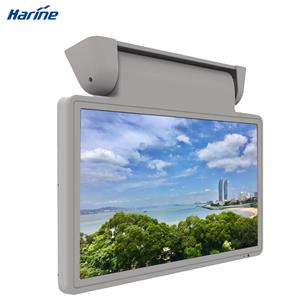
A Bus LCD Monitor is one of the most common display products used in public transportation and coach systems. It can be installed on the roof, side panel, or front area of the vehicle depending on the layout. For long-distance coaches, the screen can provide entertainment videos, travel introductions, safety reminders, or advertising content. For city buses and shuttle buses, the display can show route updates, passenger notices, or public information.
Compared with ordinary consumer screens, a bus LCD monitor should be designed for vehicle environments. It needs stable operation under vibration, temperature changes, and long working hours. The installation structure should also be strong enough for daily commercial use.
Suggested image content: Interior of a coach bus with a roof-mounted LCD screen playing passenger information. Include passengers, seats, and a clean modern display interface.
Suggested image text: Bus LCD Monitor
2. Car Monitor for Vehicle Media and Display Systems
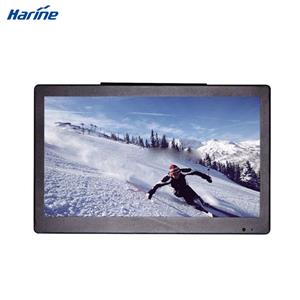
A car monitor can be used in different commercial vehicles, including buses, coaches, trucks, vans, and special-purpose vehicles. It may work as a media display, rearview display, passenger information screen, or control interface. Depending on the application, the monitor can be fixed, manual flip, motorized flip, roof-mounted, or panel-mounted.
When choosing a car monitor for commercial use, buyers should consider the installation position first. A roof-mounted monitor is suitable for buses and coaches, while a fixed monitor may be more suitable for driver assistance or dashboard applications. For passenger entertainment, screen size and viewing angle are important. For driver use, brightness, signal response, and camera compatibility may matter more.
3. Car Player System for Onboard Multimedia Management
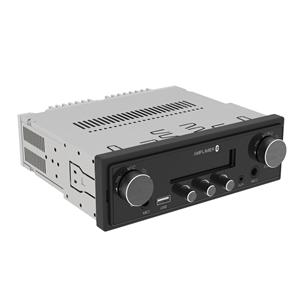
A car player is not only a device for playing music or video. In commercial vehicles, it can become the core of an onboard multimedia system. It may support USB playback, radio, Bluetooth, microphone input, video output, speaker connection, and sometimes Android-based operation.
For buses and coaches, a car player can connect with LCD monitors to play promotional videos, passenger entertainment, route introductions, or safety instructions. For construction machines, a media player may also support communication, audio playback, and driver cabin entertainment.
A reliable car player system should have stable signal output, simple operation, strong compatibility, and durable structure. For fleet operators, stable performance is more important than complicated functions, because commercial vehicles often work for long hours every day.
Suggested image content: A vehicle multimedia control system with a single DIN car player connected to multiple screens inside a bus or commercial vehicle.
Suggested image text: Car Player System
4. 360 Surround View System for Large Vehicle Safety
Large vehicles have more blind spots than passenger cars. Buses, trucks, excavators, cranes, forklifts, and engineering vehicles often operate in narrow roads, job sites, parking areas, or crowded environments. A 360 surround view system helps drivers see the area around the vehicle more clearly by combining multiple cameras and displaying a bird’s-eye view on the monitor.
This type of system can support safer reversing, turning, parking, and low-speed operation. It is especially useful for construction machinery and heavy-duty vehicles where visibility is limited by vehicle size, cabin height, or equipment structure.
For a complete 360 surround view solution, the display monitor, cameras, cables, and image processing system should be compatible. Camera waterproof performance, night vision capability, image clarity, and installation angle are all important for final performance.
5. Center Control Monitor for Smart Vehicle Operation
As commercial vehicles become more intelligent, the driver cabin needs a more integrated control interface. A center control monitor can support multimedia control, camera display, vehicle information, touch operation, and system interaction. It is often used in trucks, construction machines, special vehicles, and smart commercial vehicle cabins.
Compared with a simple monitor, a center control monitor is closer to an interactive control terminal. It may need touch screen operation, multiple input signals, customized interface design, and stable system performance. For OEM and ODM projects, the display size, housing structure, software interface, cable connection, and mounting method may all need customization.
Suggested image content: Excavator or construction machine cabin with a rugged center control monitor and 360 camera display interface. The background should show a construction site.
Suggested image text: Construction Machine Monitor
Vehicle Display Solutions for Different Buyers
Different customers may care about different points. A bus manufacturer may focus on installation compatibility and long-term supply. A fleet operator may care more about system stability and maintenance. A distributor may pay attention to product range, delivery time, and market adaptability.
For OEM and ODM buyers, customization is often important. The product may need a specific housing design, cable length, connector type, logo printing, software interface, or packaging. For project-based buyers, it is also important to match the monitor with the player, camera, and control system at the beginning, instead of selecting each product separately.
Why Professional Vehicle Display Products Are Better Than Ordinary Screens
Some buyers may wonder whether ordinary consumer screens can be used in vehicles. In many commercial applications, the answer is usually no. Vehicle environments are more complex than indoor environments. The product may face vibration, unstable power, high temperature, low temperature, dust, long-term use, and frequent operation.
Professional vehicle display products are designed with these conditions in mind. They are usually more suitable for installation inside commercial vehicles and can better match vehicle power systems, camera systems, and onboard multimedia systems.
| Ordinary Consumer Screen | Professional Vehicle Display |
|---|---|
| Mainly designed for home or office use | Designed for vehicle and commercial applications |
| Limited installation options | Supports vehicle mounting structures |
| May not handle vibration well | Better suited for moving vehicle environments |
| Usually not designed for camera integration | Can connect with cameras, players, and vehicle systems |
| Shorter daily working scenario | More suitable for long operating hours |
| Less customization | Supports OEM/ODM customization for projects |
Common Vehicle Display Product Combinations
A complete vehicle display solution often includes more than one product. The best combination depends on the vehicle application.
| Vehicle Scenario | Suggested Product Combination | Main Benefit |
|---|---|---|
| Long-distance coach | Bus LCD monitor + car player + speaker system | Passenger entertainment and travel information |
| City bus | Car bar screen display + passenger information system | Route display and public information |
| Truck | Rearview monitor + waterproof camera | Safer reversing and parking |
| Excavator | Center control monitor + 360 surround view system | Better visibility around the machine |
| Commercial fleet | Android media display + advertising content system | Digital signage and commercial media playback |
| Special vehicle | Customized monitor + camera + control interface | Project-based functional integration |