Why Do Bus LCD Monitors Need Wide Voltage Input and Power Protection?
Why Do Bus LCD Monitors Need Wide Voltage Input and Power Protection?
A bus LCD monitor may look similar to an ordinary display, but its electrical environment is completely different from that of a television or desktop monitor.
A building normally provides a relatively stable power source. A bus or coach depends on a battery, alternator, starter motor and multiple onboard electrical systems. The supply voltage changes as the engine starts, the alternator charges the battery and high-power equipment switches on or off.
These conditions can cause voltage drops, surges, electrical noise and other disturbances. Without a properly designed power circuit, a display may restart, flicker, lose its signal or suffer permanent component damage.
For this reason, wide voltage input and power protection are essential features of a reliable bus LCD monitor.
A 12V or 24V Vehicle System Does Not Always Produce Exactly 12V or 24V
A commercial vehicle may be described as having a 12V or 24V electrical system. However, these values represent nominal system voltages rather than fixed electrical inputs.
The actual voltage supplied to a bus monitor changes according to the condition of the battery, operation of the alternator, cable length, electrical load and engine status.
When the alternator is charging, the voltage may rise above the nominal battery voltage. When the engine starts, the starter motor draws a large current and can temporarily reduce the available voltage. Voltage may also fluctuate when air-conditioning systems, electric doors, lighting, audio amplifiers and other onboard equipment operate.
A display designed for a narrow and stable input range may not respond reliably to these changes.
A wide voltage bus monitor uses an internal power design that can accept a broader input range and convert it into the stable voltages required by the LCD panel, backlight, video processing circuit and control board.
What Is Wide Voltage Input?
Wide voltage input means that the monitor is designed to operate across a defined voltage range instead of requiring one exact input voltage.
For bus and coach applications, a display may be designed to support both 12V and 24V vehicle systems. The precise operating range depends on the product and should always be confirmed in the technical specification.
The internal power circuit regulates the changing vehicle supply into stable output rails for different parts of the monitor. This helps maintain consistent screen operation when the input voltage rises or falls within the specified range.
However, wide voltage input should not be confused with complete power protection.
A monitor may accept a broad range of normal operating voltages but still require additional protection against short-duration transients, reverse polarity, overcurrent and other abnormal electrical conditions.
A reliable commercial vehicle monitor needs both voltage regulation and an appropriate protection circuit.
What Happens to a Bus Monitor During Engine Start?
Engine starting is one of the most demanding moments for onboard electronics.
The starter motor requires a large amount of current. This can cause a temporary voltage drop, sometimes referred to as a cranking or cold-crank condition. The severity of the drop depends on the vehicle, battery condition, temperature and wiring system.
If the bus LCD monitor cannot tolerate the reduced voltage, it may shut down or restart. Passengers may see the screen go black, while the media system may need additional time to reconnect after the voltage returns to normal.
Frequent restarting can be particularly inconvenient when multiple monitors are connected to one bus media player. The displays may not recover at exactly the same time, resulting in inconsistent startup behavior throughout the passenger cabin.
A suitable wide-input power design helps the monitor remain stable during normal vehicle voltage variations. The complete system design must nevertheless consider the actual cranking profile of the target vehicle.
Why Can Voltage Surges Damage a Bus LCD Monitor?
Low voltage is not the only concern. Vehicle electrical systems can also produce high-voltage transients.
One important example is a load-dump event. This can occur when the battery becomes disconnected while the alternator is supplying charging current. Because the alternator cannot immediately stop producing energy, other electronics connected to the supply may experience a temporary voltage surge.
Additional transients may be produced when inductive loads such as motors, relays, solenoids or fans are switched. These events may last for only a short period, but their voltage can be high enough to stress electronic components.
The TFT panel itself is not connected directly to the vehicle battery. Its controller, video processor, backlight driver and other circuits depend on regulated low-voltage power. If a surge passes through the input stage, these components can be damaged.
Surge suppression and overvoltage protection help limit the energy that reaches sensitive circuits. The appropriate protection level must be designed according to the target vehicle and applicable project requirements.
Why Is Reverse-Polarity Protection Important?
During installation or maintenance, the positive and negative power connections may be accidentally reversed.
Without reverse-polarity protection, current can flow through the monitor in an unintended direction and damage the input circuit. In some cases, the failure may occur immediately.
A protected bus LCD monitor uses an input circuit designed to block or safely manage reverse connection. Depending on the design, this may involve diodes, MOSFET-based protection or other components.
Reverse-polarity protection does not eliminate the need for correct installation. It provides an additional safeguard against a realistic wiring error in vehicle production and after-sales maintenance.
For OEM and ODM projects, the connector design, pin definition, cable labels and installation instructions should also make incorrect wiring less likely.
Electrical Noise Can Affect Both Power and Video Signals
A bus contains many potential sources of electrical interference.
The ignition system, alternator, motors, relays, switching power supplies, LED drivers, radio equipment and audio amplifiers can introduce noise into the power network. Long cables routed through the vehicle may also receive or transmit interference.
The result may not always be permanent hardware damage. Electrical noise can appear as screen lines, image instability, audio noise, temporary signal loss or unexpected restarting.
Power filtering, PCB layout, grounding and shielding therefore contribute to the reliability of the display system. Video cables and power cables must also be routed correctly during installation.
An anti-interference monitor cannot compensate for every problem elsewhere in the vehicle. Reliable operation depends on the monitor, player, wiring harness, grounding method and installation environment working together as a complete system.
Wide Voltage Input Helps One Monitor Platform Support Different Vehicles
Bus manufacturers and system integrators may work with different vehicle platforms. Some vehicles use 12V systems, while larger buses and coaches commonly use 24V systems.
A bus LCD monitor designed for 12V/24V operation can simplify product selection across multiple projects. It may reduce the need to maintain separate display versions for every vehicle voltage.
This flexibility is particularly useful for fleet retrofits, international projects and distributors serving several commercial vehicle manufacturers.
However, buyers should not rely only on a “12V/24V” label. The product specification should state the permitted operating range, connector definition, power consumption and protection requirements.
The supplier should also understand whether the monitor will be connected directly to the vehicle supply or powered through another controller or distribution unit.
Poor Power Design Can Cause Problems That Look Like Display Failures
A black screen does not always mean that the TFT LCD panel has failed.
If the supply voltage falls below the operating threshold, the monitor may shut down even though the panel remains functional. A transient may reset the video processing circuit, while electrical noise can interfere with the signal connection.
Intermittent power connections, inadequate cable sizes and poor grounding can produce similar symptoms. These faults may appear only when the engine starts or when another high-power device is activated.
This is why power conditions should be checked when diagnosing flickering, restarting or temporary image loss.
Technicians should evaluate the voltage at the monitor connector under actual operating conditions, rather than measuring only the battery while the vehicle is stationary.
Power Requirements Should Be Confirmed During OEM Development
The electrical specification of a bus monitor should be discussed early in an OEM or ODM project.
The monitor supplier needs to know the nominal vehicle voltage, expected operating range, startup behavior, power connection method and environmental requirements. The number of monitors and the structure of the multimedia system are also relevant.
A bus with several passenger displays may use a central power distribution system. Cable length and current demand can create voltage drops between the main supply and individual monitors.
The display manufacturer can then evaluate the power input, protection circuit, connectors and cable requirements for the intended installation.
If the customer requires testing according to particular automotive electrical standards or vehicle-manufacturer specifications, this requirement should be confirmed before sample production. A general description such as “wide voltage” does not automatically mean that every standard or transient test has been completed.
Power Protection Supports Long-Term Reliability
A bus LCD monitor may operate for many hours each day and remain installed for years. Repeated exposure to electrical stress can reduce component life even when it does not cause immediate failure.
A properly designed input stage helps prevent abnormal voltage from reaching sensitive electronics. Stable voltage regulation also supports consistent backlight output, reliable video processing and predictable startup behavior.
This is especially important for roof-mounted and flip-down monitors. Once installed throughout a bus, replacing or repairing multiple displays creates labor costs and vehicle downtime.
For bus manufacturers and fleet operators, reliable power performance therefore affects more than screen quality. It influences maintenance requirements, passenger service and the total cost of the onboard display system.
A Bus LCD Monitor Is Part of a Complete Vehicle System
Wide voltage input and protection circuits are essential, but they are only part of reliable system design.
The monitor must also withstand vibration, temperature changes and long operating periods. The mounting structure should remain secure during vehicle movement, and the signal interface must be compatible with the bus media player or information system.
Power supply, signal transmission, installation and mechanical construction should be evaluated together.
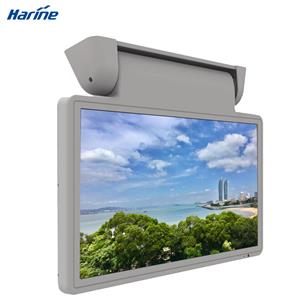
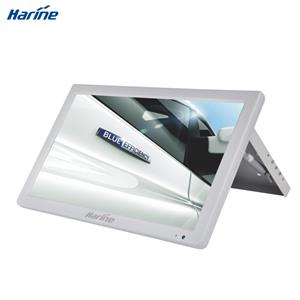
Harine develops LCD monitors and multimedia solutions for buses, coaches and other commercial vehicles. Available display configurations include fixed and flip-down monitors for passenger entertainment and information applications, with support for OEM and ODM vehicle projects.
If you are developing a bus display system, provide the vehicle voltage, monitor quantity, screen size, installation method and signal requirements. Our team can evaluate a suitable bus LCD monitor and system configuration.