How a Car Monitor Helps Improve the Modern Passenger Travel Experience
Modern passenger transportation is no longer only about moving people from one place to another. Bus operators, coach companies, airport shuttle providers, tourism fleets, and employee transportation services are now expected to provide a safer, more comfortable, and more professional travel environment.
A Car Monitor has gradually become an important part of this environment. It is no longer limited to playing movies or entertainment videos. In many commercial vehicles, it can also display passenger information, safety reminders, route updates, advertisements, tourism content, and vehicle camera images.
When properly integrated into a bus or coach system, a Car Monitor can improve the passenger experience while also helping operators communicate information more efficiently.
A More Effective Way to Communicate with Passengers
Passengers often need clear and timely information during a journey. This may include the next stop, route changes, destination reminders, safety instructions, emergency notices, transfer information, or service announcements.
Audio announcements are useful, but they may be difficult to hear in a noisy vehicle. Some passengers may also miss the announcement because they are talking, wearing headphones, or sitting far from the speaker.
A Car Monitor provides a visual communication channel inside the vehicle. Important information can remain on the screen long enough for passengers to read and understand it. This is especially useful in city buses, airport shuttles, sightseeing coaches, and long-distance passenger vehicles.
For international routes or tourism services, the screen can also display information in several languages. This makes communication easier for passengers from different countries and helps transport operators provide a more organized service.
Improving Comfort During Long-Distance Travel
Passengers on long-distance coaches may spend several hours inside the vehicle. A journey without suitable onboard content can feel tiring, especially when traffic conditions increase travel time.
A Car Monitor can help create a more comfortable environment by displaying films, music programs, travel videos, local news, tourism introductions, or entertainment content. The screen can also show information about the destination, nearby attractions, hotels, restaurants, and local services.
For tourism coaches, this function is particularly valuable. The operator can introduce scenic areas before passengers arrive, explain local culture, or provide useful travel instructions. Airport and hotel shuttle services can use the screen to display terminal guidance, check-in reminders, hotel facilities, or city transportation information.
The purpose is not simply to keep passengers entertained. A well-planned display system can make the entire journey feel more professional and better organized.
Strengthening the Operator’s Brand Image
The interior of a commercial vehicle is part of the passenger’s overall impression of the transport company. A clean, modern, and well-equipped vehicle can increase trust and improve customer satisfaction.
A Car Monitor can display the company logo, service information, customer support details, promotional campaigns, and branded visual content. This creates a consistent image throughout the journey.
For coach companies, tourism fleets, hotel shuttles, airport transfer services, school transportation providers, and corporate commuter buses, the monitor can become an important communication point between the operator and the passenger.
Instead of using only printed posters, companies can update digital content whenever necessary. This makes it easier to promote seasonal services, new routes, customer membership programs, special offers, or important operational notices.
Creating Additional Advertising Opportunities
A Car Monitor can also be used as an onboard digital advertising platform. Compared with printed advertising, digital content is more flexible and visually attractive.
Transport operators may use the screen to promote their own services or work with local advertisers. Restaurants, hotels, tourist attractions, shopping centers, insurance companies, travel agencies, and mobile applications may all be interested in reaching passengers during a journey.
Advertising content can be adjusted according to the route, destination, time of day, or passenger group. For example, a tourism coach can display advertisements related to local attractions, while an airport shuttle may show hotel, car rental, or transportation services.
This can help operators make better use of the onboard display system and may create an additional source of revenue.
Working as Part of a Complete Vehicle System
A Car Monitor normally does not operate alone. It may connect with a vehicle media player, Android control system, DVD player, central control unit, camera system, navigation device, or onboard computer.
Because of this, compatibility is very important. The monitor must support the correct video signal, power supply, control method, and connection interface.
Before choosing a product, buyers should confirm how the monitor will be used and which devices it needs to connect with. A screen used mainly for entertainment may require different interfaces from one used for surveillance cameras or passenger information.
The operating voltage must also match the vehicle electrical system. Commercial vehicles may experience voltage fluctuations, vibration, and long operating hours, so a suitable Car Monitor should be designed for vehicle environments rather than ordinary indoor use.
Why Vehicle Monitors Need Reliable Construction
A household television usually operates in a stable indoor environment. A monitor installed inside a bus or coach faces much more demanding conditions.
The vehicle may travel on uneven roads, operate for many hours every day, and experience repeated vibration, temperature changes, dust, and voltage variation. These conditions can affect the screen, internal circuit, connectors, cables, and mounting structure.
For this reason, the housing design, power system, heat dissipation, mounting method, and signal stability are important considerations. A reliable monitor should remain securely installed and maintain stable performance during daily vehicle operation.
This is especially important for fleet operators. When dozens or hundreds of vehicles use the same display system, even a small reliability problem can increase maintenance costs and affect passenger service.
Different Installation Methods for Different Vehicles
The installation method of a Car Monitor should match the interior design of the vehicle.
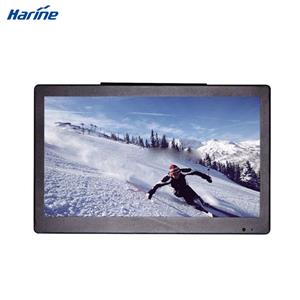
Fixed monitors are suitable for positions where the screen can remain visible during operation. They are commonly installed at the front, middle, or rear of buses and coaches.
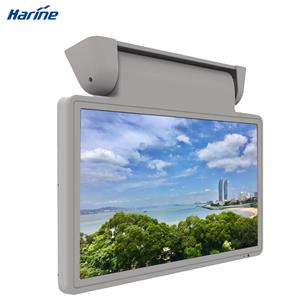
Manual-flip monitors can be folded when they are not in use. This design helps save space and reduces obstruction inside the passenger area.
Motorized monitors can open and close automatically. They are often used in premium coaches, tourism vehicles, and customized passenger transport projects where appearance and convenience are important.
The best installation method depends on the vehicle layout, viewing distance, ceiling height, passenger seating arrangement, wiring position, and maintenance requirements.
Choosing a Car Monitor Based on the Real Application
There is no single monitor configuration that is suitable for every commercial vehicle.
A city bus may mainly need route information and advertising. A long-distance coach may focus more on entertainment. A tourism vehicle may require destination introductions and video programs. A school bus may use the screen for safety education, while a construction or service vehicle may use it to display camera images.
Before selecting a Car Monitor, the buyer should clearly understand the main purpose of the system. Screen position, signal input, power requirements, viewing distance, operating environment, installation structure, and control functions should all be considered.
Choosing a monitor based only on screen size or price may lead to installation problems later. A better approach is to evaluate the complete vehicle system and select a display that fits the actual project.
The Importance of Customized Solutions
Many commercial vehicle projects require more than a standard monitor.
Vehicle manufacturers and system integrators may need customized housing, brackets, cables, interfaces, operating voltage, control functions, menu languages, startup logos, or packaging.
Customization can help the monitor fit the vehicle structure more accurately and reduce installation work. It can also make the final product more consistent with the customer’s brand and technical requirements.
For large fleet projects, a customized Car Monitor solution can improve installation efficiency and make future replacement or maintenance easier.
Long-Term Maintenance Should Not Be Ignored
A Car Monitor should be easy to inspect and maintain after installation.
The mounting structure should remain secure, and the power and signal cables should be accessible when maintenance is required. Connectors should be checked regularly to prevent loose connections caused by vibration.
The screen surface, ventilation area, control buttons, remote control, and cable condition should also be inspected during routine vehicle maintenance.
A standardized installation design can reduce repair time and make replacement easier across a large fleet. This is an important consideration for transport operators that rely on the monitor every day.
More Than Just an Entertainment Screen
The role of the Car Monitor has expanded significantly. It can now support passenger communication, route information, entertainment, advertising, tourism promotion, fleet branding, safety education, surveillance display, and driver assistance.
This makes it a valuable part of a modern bus or coach system.
The most suitable monitor is not necessarily the product with the largest screen or the most functions. It is the product that matches the vehicle structure, passenger needs, operating environment, and connected equipment.
Conclusion
A Car Monitor can improve the passenger travel experience while also supporting more efficient vehicle operation. It provides a clear way to deliver information, entertainment, advertising, safety content, and branded communication inside buses and coaches.
For transport companies, vehicle manufacturers, and system integrators, selecting the right monitor requires careful consideration of installation, compatibility, reliability, control functions, and long-term maintenance.
When the product is properly designed for the application, a Car Monitor becomes more than a screen. It becomes an important part of the overall passenger transport solution.