Fixed, Manual Flip or Motorized Bus Monitor: Installation Differences for Coach Projects
A bus monitor is not selected only by screen size or resolution. Its mounting structure also affects installation space, passenger visibility, daily operation, maintenance requirements and the overall appearance of the vehicle interior.
For bus manufacturers, coach body builders and fleet system integrators, three common configurations are available: fixed monitors, manual flip monitors and motorized flip monitors. Although all three can display entertainment, passenger information, safety instructions and advertising content, they are designed for different vehicle layouts and operating requirements.
Understanding these structural differences can help project teams define a more suitable onboard display solution before confirming screen size, interface and customization details.
What Is a Fixed Bus Monitor?
A fixed bus monitor remains in its operating position after installation. It may be mounted on the ceiling, front bulkhead, side panel or another designated area inside the passenger cabin.
Because it does not require a folding mechanism, the structure is relatively straightforward. This makes a fixed monitor suitable for vehicles where the display needs to remain visible throughout the journey.
A fixed installation is commonly used for:
Passenger information
Route announcements
Safety videos
Onboard advertising
Entertainment playback
Real-time operational information
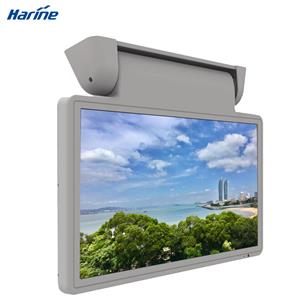
For example, the 18.5 Inch Fixed Bus LCD Monitor combines a compact screen size with a stable fixed structure. It can be integrated into buses, coaches, shuttle vehicles and other commercial passenger vehicles.
Main Advantages of a Fixed Bus Monitor
The fixed structure contains fewer moving components, which can simplify installation and reduce mechanical maintenance. It is also convenient for applications where the screen must always remain available.
However, project engineers need to confirm that the monitor will not obstruct passenger movement, luggage compartments, emergency access or the driver’s field of view. The mounting position therefore needs to be considered during the early stage of the vehicle interior design.
What Is a Manual Flip Bus Monitor?
A manual flip bus monitor is usually installed on the vehicle ceiling. The screen can be folded down when passengers need to view content and folded back up when it is not in use.
This structure provides a practical balance between space efficiency and system simplicity. It does not require an electric motor to open or close the display, making it suitable for coach projects that need a foldable screen without adding a motorized mechanism.
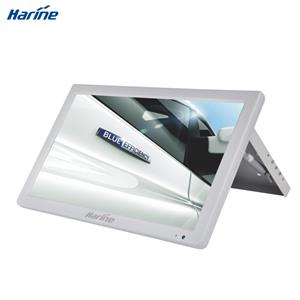
The 21.5 Inch Manual Flip Bus LCD Monitor features a Full HD screen, wide-voltage input and a fold-down installation structure developed for buses and coaches.
Where Manual Flip Monitors Work Well
Manual flip monitors are often used in tour coaches, employee shuttle buses, intercity vehicles and other passenger transport applications. When the monitor is folded away, the ceiling area appears cleaner and passengers have more unobstructed space.
This type of bus monitor may be appropriate when:
The display is used only during part of the journey
Ceiling space is limited
A foldable structure is required
Manual operation is acceptable
The project needs to control system complexity
The installation team should make sure the monitor can be reached safely by a driver, attendant or other authorized operator. The hinge and locking structure should also be designed for repeated opening and closing in a moving vehicle environment.
What Is a Motorized Bus Monitor?
A motorized bus monitor uses an electric mechanism to open and close the screen. Depending on the system design, the monitor may be controlled by a dedicated switch, vehicle control system or multimedia system.
Compared with manual operation, the motorized structure provides a more automated and integrated passenger experience. Several monitors can potentially be opened or closed according to the vehicle’s operating procedure.
The 21.5 Inch Motorized Flip Bus LCD Monitor is designed for roof-mounted coach installations and combines an automatic flip mechanism with a large Full HD display.
Typical Applications
Motorized monitors are particularly suitable for premium coaches, tourism vehicles, long-distance buses and customized passenger transport projects where interior appearance and automated operation are important.
A motorized design may be preferred when:
The operator needs centralized screen control
Monitors are installed beyond easy manual reach
Multiple screens need coordinated operation
A modern interior appearance is required
The display must be stored automatically when not in use
Because the monitor includes moving and electrical components, the project should also consider mechanism durability, control logic, wiring layout and maintenance access.
Fixed vs Manual Flip vs Motorized Bus Monitor
| Comparison | Fixed Monitor | Manual Flip Monitor | Motorized Monitor |
|---|---|---|---|
| Screen position | Always visible | Manually folded | Electrically opened and closed |
| Mechanical structure | Relatively simple | Includes hinge and locking structure | Includes motor and control mechanism |
| Space saving | Limited | Good | Good |
| Operation | No opening required | Requires manual operation | Automatic operation |
| Maintenance | Generally simpler | Moderate | More components to inspect |
| Typical use | Continuous information display | Standard coach entertainment | Premium and integrated coach systems |
| Project cost | Usually lower | Medium | Usually higher |
There is no single mounting structure that works best for every vehicle. The appropriate option depends on the coach layout, operating method, maintenance plan and passenger information requirements.
Installation Factors That Should Be Confirmed
Before selecting a bus monitor, vehicle manufacturers and system integrators should evaluate more than the folding method.
Available Installation Space
The monitor dimensions must match the ceiling structure, front compartment or mounting panel. For a flip-down monitor, sufficient clearance is required for the screen to open completely without contacting seats, luggage racks or other interior components.
Viewing Distance and Screen Size
A larger bus LCD monitor can improve visibility for passengers seated farther away, but screen size should still match the cabin width, seat arrangement and installation height.
Smaller vehicles may use compact 15.6-inch or 18.5-inch displays, while larger coaches may benefit from 21.5-inch, 24-inch or 27-inch models.
Vehicle Power Environment
Unlike a display installed in a building, a coach monitor operates from the vehicle electrical system. Voltage fluctuations, engine starting and other electrical equipment can affect display stability.
Wide-voltage input, anti-interference design and suitable power protection are therefore important for both 12V and 24V commercial vehicle systems.
Vibration and Mechanical Stability
Road vibration places continuous stress on the screen, mounting bracket, internal connections and folding mechanism. A bus monitor should use a structure developed for vehicle operation rather than a standard indoor television adapted for mobile use.
For manual and motorized monitors, particular attention should be given to the hinge, rotating components and locking position.
Video Interface and System Integration
The selected interfaces must be compatible with the vehicle media player, passenger information system or central control equipment. Depending on the project, available signals may include RCA, VGA, HDMI or customized connections.
Interface requirements should be confirmed before production instead of relying only on the monitor’s screen specifications.
Which Structure Fits Different Coach Projects?
For city buses and shuttle vehicles that continuously display route or passenger information, a fixed bus monitor can provide straightforward operation and stable visibility.
For standard tourism coaches that use screens mainly for entertainment, a manual flip monitor offers a space-saving structure without requiring a motorized control system.
For premium coaches or customized vehicle projects, a motorized bus monitor can support automated operation and a cleaner cabin appearance when the display is stored.
Large projects may also use more than one structure. For example, a fixed front monitor can show passenger information while additional roof-mounted flip monitors provide entertainment to passengers in the middle and rear seating areas.
OEM and ODM Bus Monitor Solutions
Commercial vehicle projects often require more than a standard screen. Installation brackets, housing design, input interfaces, control functions, power requirements and appearance may need to match a specific vehicle platform.
Harine develops bus and coach display solutions for vehicle manufacturers, coach builders, transport operators and system integrators. Available configurations include fixed, manual flip and motorized monitors in different screen sizes.
Project requirements such as mounting position, vehicle voltage, signal source, screen quantity and operating method should be provided during the early discussion stage. This allows the display and installation structure to be evaluated as part of the complete vehicle system.
FAQ
What is the difference between a fixed and flip-down bus monitor?
A fixed bus monitor remains visible after installation. A flip-down monitor can be folded toward the ceiling when it is not required, helping reduce occupied cabin space.
Does a manual flip bus monitor require electrical control?
The display still requires electrical power and a video signal, but its opening and closing movement is performed manually rather than by an electric motor.
Can a motorized bus monitor be connected to a central control system?
It may be possible depending on the monitor design and project requirements. The required control method and signal logic should be confirmed with the manufacturer before production.
Which bus monitor is easier to maintain?
A fixed monitor generally contains fewer moving components. Manual and motorized monitors require additional inspection of hinges, locking structures or motorized mechanisms.
Can bus monitors be customized for OEM vehicle projects?
Yes. Screen size, housing, mounting structure, input interface, power configuration and other functions can be adjusted according to project quantity and technical requirements.